Cancer stories are often told in tidy arcs or in medicalized language. Diagnosis. Treatment. Ring the bell. Survivor. Move forward.
Young adult survivors, patients, caregivers, and co-survivors know it rarely works that way.
Life within and after cancer can be messy, quiet, complicated, funny, exhausting, beautiful, and uncertain all at once. It can mean navigating work, school, parenting, and relationships while balancing chemotherapy, surgery, or radiation. It can mean celebrating no progression of disease while still carrying the burden of scanxiety and frequent oncology appointments. It can mean holding grief and gratitude in one hand or rebuilding a sense of identity when the person you were before cancer feels lost.
The Through the Lens: Life Beyond Young Adult Cancer Photovoice Exhibit invites the public into those realities. This exhibit is part of the Through the Lens national campaign, a creative and research initiative developed by the School of Social Work at Colorado State University and curated by members of the Serious Illness and End-of-Life Narratives Lab alongside the Through the Lens Young Adult Advisory Board.
Through the Lens features artwork from 16 young adult cancer survivors across the country, bringing together photography, personal narratives, paintings, and poetry that explore what survivorship actually looks like for young adults. Instead of statistics or medical explanations, these stories come directly from the people who have lived them. The result is an exhibit that feels less like a gallery and more like a collection of lived, tender moments, showcasing the art and perspectives of young adults with cancer.
When Survivors Hold the Camera
At the heart of this project is a creative storytelling method called photovoice. Photovoice invites people to document their own lived experiences through photography, poetry, art, and narrative. Instead of having their stories interpreted by researchers or clinicians, participants choose the moments, objects, and images that best represent their lives. For young adults navigating cancer, that kind of storytelling can be deeply powerful. It allows survivors to reclaim authorship of their experiences and share perspectives often overlooked in traditional cancer narratives. Through their art, they advocate for equitable cancer care for young adults.
The goals of the exhibit reflect that intention.
The project seeks to increase awareness of the psychosocial impact that young adult cancer can have on identity, relationships, and developmental milestones. It amplifies the wisdom of survivors as they navigate meaning-making and rebuilding purpose. And it highlights the complex uncertainty many young adults carry long after treatment ends.
The Stories Behind Art
Walking through the exhibit means stepping into deeply personal moments.
Some images capture the intensity of treatment.
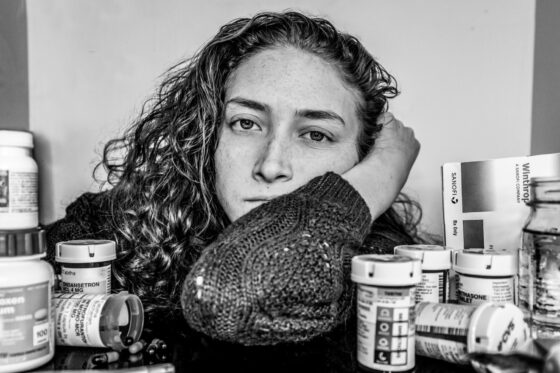
One artist shares a self-portrait taken beside a bedside table overflowing with prescription bottles and scattered medications. The photograph reflects the exhausting routine of managing symptoms and navigating a flood of treatments while already living with chronic illness.
Some photographs hold quiet spaces for reflection.
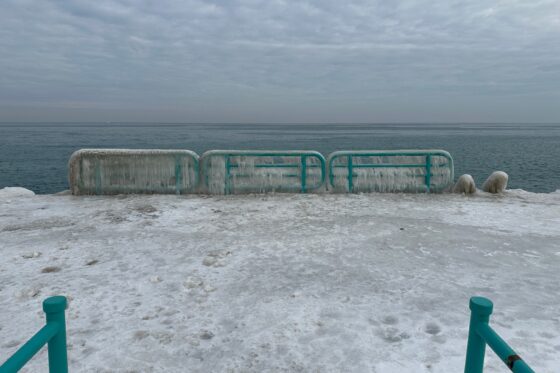
One survivor shares images of Lake Michigan, a place she drives to on difficult days to sit with the water and reset.
Several artists explore grief and legacy.

One photograph shows a shoreline once shared with both of the artist’s parents, who passed away from cancer. In a second image, the landscape remains the same, but the figures are gone. The absence speaks as loudly as their presence once did.
Across the exhibit, there is a shared honesty that many young adult survivors will recognize immediately. Life after cancer does not follow a single narrative. One of the most powerful elements of the exhibit is its honesty in portraying the emotional terrain that young adults often navigate after treatment. Several artists describe the feeling of living with a shadow that never quite lifts. Even on days when life feels joyful or ordinary, there can still be a quiet awareness of follow-up scans, lingering side effects, and the possibility of recurrence.
Others explore the complicated process of rebuilding identity. Who are you after cancer? How do you integrate the person you were before diagnosis with the person you have become through the experience? These are questions many survivors continue asking for years.
The exhibit does not attempt to resolve those questions. Instead, it creates space for them to exist. It offers room for these experiences to be seen, held, and empathically witnessed. In many ways, the artwork gently turns the question back toward the viewer.
Will you bear witness to the truth of our experiences?
Creativity as a Way Through
Many of the artists describe creativity as part of their healing process.
Photography, painting, and storytelling offered a way to slow down and reflect during recovery. One artist shares how creating art helped quiet the judgmental voice that often demanded perfection, allowing space to simply exist.
Another artist describes photography as a way to document moments during treatment that felt surreal or impossible to explain. Capturing those moments created a form of proof that the experience was real, something they could return to later to better understand what they had lived through.
Creative expression does not erase the hardship of cancer. But it can offer language, especially when words fall short, for emotions that are difficult to name. For many young adults with cancer, art becomes both a coping tool and a form of meaning-making in its own right.
The Team Behind Through The Lens
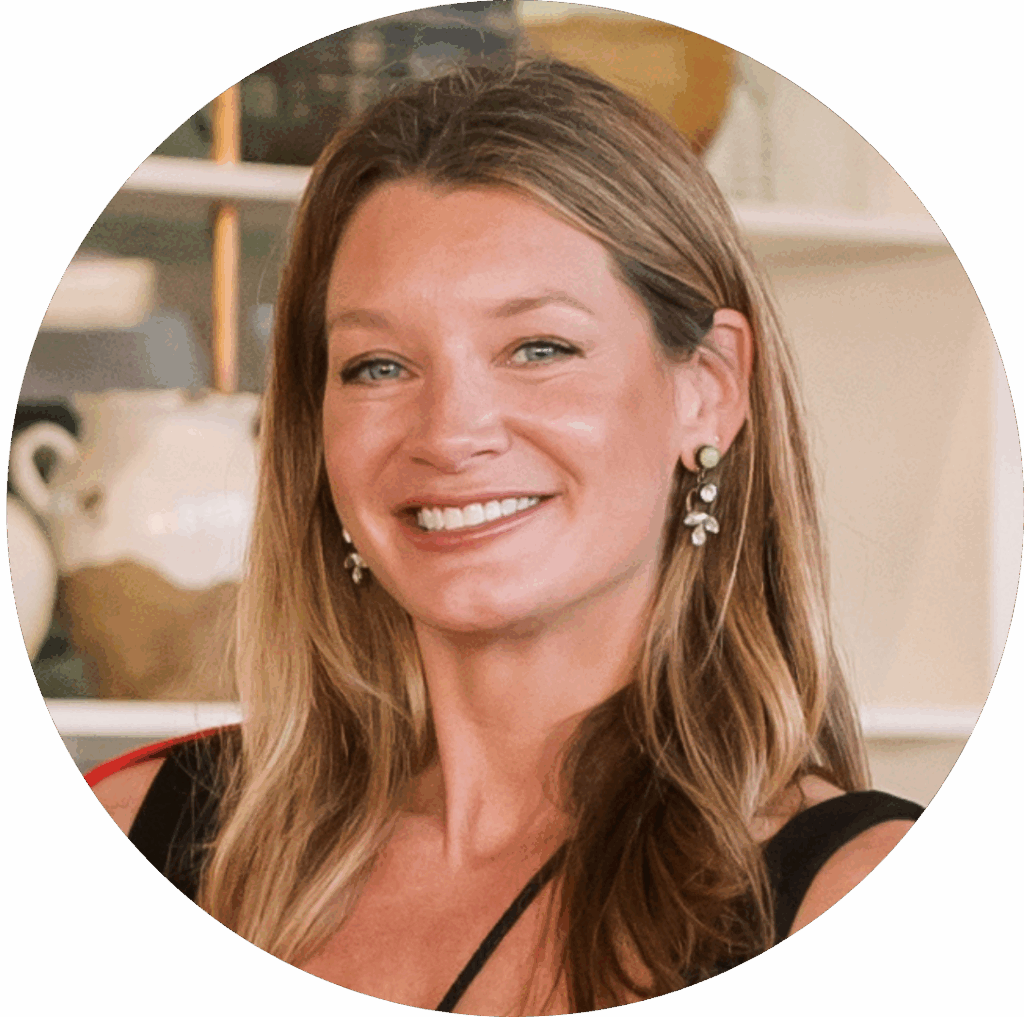
The project is led by Dr. Jen Currin-McCulloch, an Associate Professor of Social Work at Colorado State University. Her career has focused on oncology and palliative care, with a particular interest in the ways people find hope and meaning while living with serious illness.
Through her clinical work in hospital settings, Dr. Currin-McCulloch often met young adults navigating cancer who shared that medical conversations rarely included the parts of life that still brought them joy or purpose. That observation became the spark for creating a space where young adults could explore those questions together.
See the Exhibit in Fort Collins
The Through the Lens: Life Beyond Young Adult Cancer photo exhibit will be on display in Fort Collins, Colorado, this April.
Exhibit Hours
April 8 to April 12
12:00 PM to 6:00 PM MST
Reception
Saturday, April 11
3:00 PM to 5:00 PM MST
Location
Center for Creativity
200 Mathews St
Fort Collins, CO 80524
Visitors are invited to explore the artwork, reflect on the stories behind the images, and engage with the many ways young adults navigate life after cancer.
Organizations interested in bringing the traveling exhibit to their own community can inquire through the Through the Lens website or contact Dr. Jen Currin-McCulloch at Colorado State University at jen.currin_mcculloch@colostate.edu or call (970) 391-4941.
What It Means to Witness
Many young adult cancer survivors spend years explaining their experiences to people who have never lived through them. This exhibit offers a different invitation.
Instead of simplifying those stories, Through the Lens allows them to exist in their full complexity. Through the lens of these artists, we are invited not just to look, but to truly see what life beyond young adult cancer can hold.
To learn more, please visit: Colorado State University Photovoice Exhibit