Ask Perrie: More Than Just Tired

Dear Perrie,

I am a few years out of active treatment, and I still have significant post-treatment fatigue. Not looking for strategies to combat fatigue, but more on how to explain it to other people that my “tired” (bone-deep exhaustion) is different than other people’s “tired.” It’s hard, because I also look physically well now and I’m able to “function” well. Advice needed, Perrie!!

Dear More Than Just Tired,

First, I want to validate that your experience makes sense, and you are far from alone in this. So many young adults I talk to share this exact tension: they look “functional” (especially as young adults). Some may even have a habit of pushing through chronic symptoms so they can still participate in regular life, but end up crashing later. This all happens while carrying bone-deep fatigue and the internal battle of managing capacity as an adult. That’s a lot. 

One tool that can really help put language to this is Spoon Theory. If you’re not familiar, it’s a way of describing energy as a limited number of “spoons” you start the day with. Every task (like getting dressed, working, socializing, even thinking through something emotional) costs a spoon. Using this framework with others can sometimes help them visualize what it’s like to balance capacity while living with chronic fatigue. 

So, instead of saying “I’m tired,” you might say: “I only have a certain number of spoons each day, and I have to choose carefully how I use them.” Or “If I spend my energy here, I might not have enough left for something later. I’ve found that language like this can sometimes help ‘normies’ understand that chronic fatigue isn’t about willpower or effort, it’s about capacity. In my personal life, I’ve even set up a system at home so my husband knows my spoons/capacity that day. I’ll write on the whiteboard or text him how many spoons I have, which helps us adjust our schedule accordingly. 

It may also help to pair Spoon Theory with language such as “dynamic disability” and “invisible illness”. Dynamic disability means your abilities are not fixed. Your capacity can shift day to day or even hour to hour, so what feels manageable one day may feel impossible the next. Invisible illness means what you’re experiencing may not be obvious to others. You might look “fine” while your body is working overtime just to function. Together, these terms can help explain why chronic fatigue is so hard for others to see or understand and help to reinforce your limits when discussing your fatigue with others. 

Lastly, it may also be supportive to get concrete about what support actually looks like. People often want to help, but don’t know how, having never lived through cancer or chronic fatigue. You might say something like, “It helps when plans are flexible,” “I may need to cancel at the last minute,” “Offering options instead of expectations makes things easier,” or “Low-energy time together still means a lot to me.” These types of statements set expectations and communicate directly the type of support that feels most helpful for YOU. You might need to practice these statements on your own at first, and that’s okay! I’ve been known to have a mirror conversation or two to help myself practice naming my needs.

All that said, there is a hard truth we can’t avoid when communicating our needs: Even the best explanation won’t make everyone understand.

You can do your best to explain your experience. You can offer tools to understand. You can be vulnerable and honest. But you cannot control whether someone truly gets it. What you can control is how you care for yourself in response. That’s where boundaries come in. That might sound like, “I need to head out early so I don’t overdo it.” “I can’t commit to that right now.” “I need a slower day today.” Try not to over-explain, and try not to apologize for having real limits! Boundary work is often easier said than done, because we then have to sit with someone’s uncomfortable reactions to our boundaries. I recommend checking out Nedra Glover, a licensed therapist and author who discusses boundary-setting extensively, as a tool for support. 

And as a side note, if you do share vulnerably (which is always optional) with someone and take the time to explain your fatigue, your limits, your reality, and they dismiss it, minimize it, or continue to expect more from you than you can give… that’s important information about the relationship. Don’t get me wrong, some people will meet you there. They’ll adjust expectations, move plans around, respect your limits, and truly care about your capacity. They’ll make a real effort to accommodate your needs and still include you. These types of relationships are worth their weight in gold. And still…. others won’t. Part of navigating life after cancer is learning to invest your energy in the relationships that can honor your reality, not fight against it.

There is also something really powerful in your question. I can tell that you are learning how to listen to and honor your body, name your limits, and advocate for yourself in ways most people never have to. This work is hard, but it’s absolutely vital in reconnecting with yourself after an experience like cancer. I’m really proud of you for doing the hard things! 

With you in it,
Perrie 🌵

Ask Perrie is Cactus Cancer Society’s advice column for the questions that young adult cancer doesn’t come with instructions for. Community members submit anonymous questions, and Perrie offers thoughtful guidance, perspective, and practical ideas for navigating life during and after cancer.

Through the Lens: Young Adult Cancer Survivors Share Their Stories in a National Photo Exhibit

Cancer stories are often told in tidy arcs or in medicalized language. Diagnosis. Treatment. Ring the bell. Survivor. Move forward.

Young adult survivors, patients, caregivers, and co-survivors know it rarely works that way.

Life within and after cancer can be messy, quiet, complicated, funny, exhausting, beautiful, and uncertain all at once. It can mean navigating work, school, parenting, and relationships while balancing chemotherapy, surgery, or radiation. It can mean celebrating no progression of disease while still carrying the burden of scanxiety and frequent oncology appointments. It can mean holding grief and gratitude in one hand or rebuilding a sense of identity when the person you were before cancer feels lost. 

The Through the Lens: Life Beyond Young Adult Cancer Photovoice Exhibit invites the public into those realities. This exhibit is part of the Through the Lens national campaign, a creative and research initiative developed by the School of Social Work at Colorado State University and curated by members of the Serious Illness and End-of-Life Narratives Lab alongside the Through the Lens Young Adult Advisory Board.

Through the Lens features artwork from 16 young adult cancer survivors across the country, bringing together photography, personal narratives, paintings, and poetry that explore what survivorship actually looks like for young adults. Instead of statistics or medical explanations, these stories come directly from the people who have lived them. The result is an exhibit that feels less like a gallery and more like a collection of lived, tender moments, showcasing the art and perspectives of young adults with cancer. 

When Survivors Hold the Camera

At the heart of this project is a creative storytelling method called photovoice. Photovoice invites people to document their own lived experiences through photography, poetry, art, and narrative. Instead of having their stories interpreted by researchers or clinicians, participants choose the moments, objects, and images that best represent their lives. For young adults navigating cancer, that kind of storytelling can be deeply powerful. It allows survivors to reclaim authorship of their experiences and share perspectives often overlooked in traditional cancer narratives. Through their art, they advocate for equitable cancer care for young adults. 

The goals of the exhibit reflect that intention.

The project seeks to increase awareness of the psychosocial impact that young adult cancer can have on identity, relationships, and developmental milestones. It amplifies the wisdom of survivors as they navigate meaning-making and rebuilding purpose. And it highlights the complex uncertainty many young adults carry long after treatment ends.

The Stories Behind Art

Credit: Colorado State University, Photovoice Exhibit Artist: Tabitha

Walking through the exhibit means stepping into deeply personal moments.

Some images capture the intensity of treatment. 

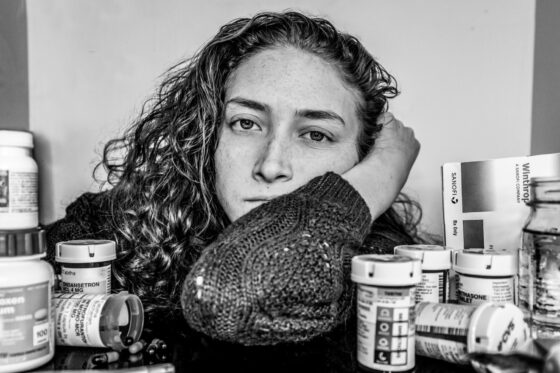
One artist shares a self-portrait taken beside a bedside table overflowing with prescription bottles and scattered medications. The photograph reflects the exhausting routine of managing symptoms and navigating a flood of treatments while already living with chronic illness.

Some photographs hold quiet spaces for reflection. 

Credit: Colorado State University, Photovoice Exhibit. Artist: April

One survivor shares images of Lake Michigan, a place she drives to on difficult days to sit with the water and reset. 

Several artists explore grief and legacy. 

Credit: Colorado State University, Photovoice Exhibit. Artist: Aerial

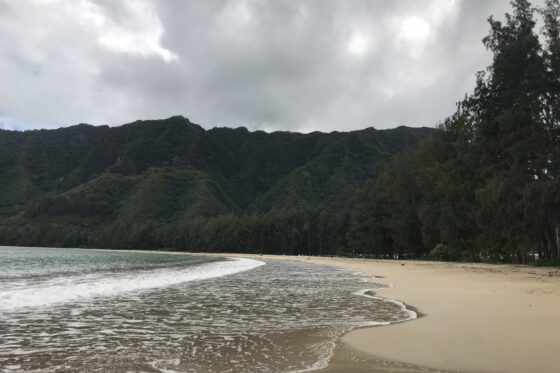
One photograph shows a shoreline once shared with both of the artist’s parents, who passed away from cancer. In a second image, the landscape remains the same, but the figures are gone. The absence speaks as loudly as their presence once did.

Across the exhibit, there is a shared honesty that many young adult survivors will recognize immediately. Life after cancer does not follow a single narrative. One of the most powerful elements of the exhibit is its honesty in portraying the emotional terrain that young adults often navigate after treatment. Several artists describe the feeling of living with a shadow that never quite lifts. Even on days when life feels joyful or ordinary, there can still be a quiet awareness of follow-up scans, lingering side effects, and the possibility of recurrence.

Others explore the complicated process of rebuilding identity. Who are you after cancer? How do you integrate the person you were before diagnosis with the person you have become through the experience? These are questions many survivors continue asking for years.

The exhibit does not attempt to resolve those questions. Instead, it creates space for them to exist. It offers room for these experiences to be seen, held, and empathically witnessed. In many ways, the artwork gently turns the question back toward the viewer.

Will you bear witness to the truth of our experiences?

Creativity as a Way Through

Many of the artists describe creativity as part of their healing process.

Photography, painting, and storytelling offered a way to slow down and reflect during recovery. One artist shares how creating art helped quiet the judgmental voice that often demanded perfection, allowing space to simply exist.

Another artist describes photography as a way to document moments during treatment that felt surreal or impossible to explain. Capturing those moments created a form of proof that the experience was real, something they could return to later to better understand what they had lived through.

Creative expression does not erase the hardship of cancer. But it can offer language, especially when words fall short, for emotions that are difficult to name. For many young adults with cancer, art becomes both a coping tool and a form of meaning-making in its own right.

The Team Behind Through The Lens

The Through the Lens intervention and national photo exhibit were developed by a team of researchers and oncology social workers at the School of Social Work at Colorado State University, dedicated to amplifying the voices of young adults living with cancer.

The project is led by Dr. Jen Currin-McCulloch, an Associate Professor of Social Work at Colorado State University. Her career has focused on oncology and palliative care, with a particular interest in the ways people find hope and meaning while living with serious illness.

Through her clinical work in hospital settings, Dr. Currin-McCulloch often met young adults navigating cancer who shared that medical conversations rarely included the parts of life that still brought them joy or purpose. That observation became the spark for creating a space where young adults could explore those questions together.

See the Exhibit in Fort Collins

The Through the Lens: Life Beyond Young Adult Cancer photo exhibit will be on display in Fort Collins, Colorado, this April.

Exhibit Hours
April 8 to April 12
12:00 PM to 6:00 PM MST

Reception
Saturday, April 11
3:00 PM to 5:00 PM MST

Location
Center for Creativity
200 Mathews St
Fort Collins, CO 80524

Visitors are invited to explore the artwork, reflect on the stories behind the images, and engage with the many ways young adults navigate life after cancer.

Organizations interested in bringing the traveling exhibit to their own community can inquire through the Through the Lens website or contact Dr. Jen Currin-McCulloch at Colorado State University at jen.currin_mcculloch@colostate.edu or call (970) 391-4941. 

What It Means to Witness

Many young adult cancer survivors spend years explaining their experiences to people who have never lived through them. This exhibit offers a different invitation.

Instead of simplifying those stories, Through the Lens allows them to exist in their full complexity. Through the lens of these artists, we are invited not just to look, but to truly see what life beyond young adult cancer can hold.

To learn more, please visit: Colorado State University Photovoice Exhibit

Ask Perrie: Waiting for the Other Shoe to Drop

Hi Perrie,

I’m about to turn 30 in two weeks, and I’ve been in remission from stage 3 triple-positive breast cancer for two and a half years now. I always struggled with taking care of myself before cancer, and now in survivorship, I struggle with the fear of losing my job due to the chronic issues I have now. I was fired while in active treatment at a different job, so it’s hard not to think it could happen again for something as minor as me having to call in sick two days in a row. Do you have any advice on how to handle that fear or advice on how to better advocate and take care of myself? 

Thank you

Dear Waiting for the Other Shoe to Drop,

Survivorship is full of polarities. There’s a push of “you should be all better now” and a pull of “I’m anything but better now.” Let’s make space for where you really are. I’m hearing that you’re juggling chronic illness, maybe even chronic pain, while also trying to take care of yourself, be an adult, pay bills, and show up as an employee. That’s a lot, and I’m probably only touching the surface!

Job insecurity carries real risk, and I don’t want to diminish or invalidate that, especially since you’ve already lived through losing a job during treatment. At the same time, I can hear how the fear of it happening again is starting to get in the way of day-to-day things like taking breaks when you need them, calling out sick, or advocating for yourself.

Giving yourself permission to take care of your body starts from within, and that often begins with self-compassion. You mentioned that caring for yourself was already hard before cancer entered the room. Survivorship can be an opportunity to gently renegotiate that relationship with yourself. Developing more self-understanding and compassion may help you rebuild trust in your own needs and limits.

If you’re open to exploring this, I’d recommend looking into the work of Kristin Neff, who researches and teaches self-compassion. Her workbook, guided meditations, and free online resources can be a helpful starting place: https://self-compassion.org/. Practicing self-compassion regularly can slowly help retrain your brain to respond with kindness toward yourself in moments of overwhelm instead of criticism or fear.

Speaking of fear, what you’re describing can also be deeply connected to anxiety. Your brain is doing what brains do best: trying to predict outcomes in order to keep you safe. The trouble is that sometimes that protective system goes into overdrive. Which, let’s be real, makes sense inside of cancer because you’ve really been through it! 

When you notice fear (whether that’s job loss or any other kind) rising, I’d encourage you to approach it with curiosity rather than judgment. That might sound counterintuitive, because most of us want to avoid fear as quickly as possible. But curiosity can help you gather important information about what you actually need in those moments.

For example, you might notice that fear shows up physically, maybe your breathing gets shallow, or your body feels restless. In that case, regulating your body through breathing or grounding exercises might help. Or maybe fear pulls you into spiraling thoughts and worst-case scenarios (honestly, relatable). In those moments, it may help to gently redirect your thinking or talk through those fears with someone you trust.

And if the fear continues to feel overwhelming, working with a qualified therapist can help navigate those patterns.

As far as advocacy goes, I want to say this clearly: advocating for your needs isn’t selfish. It isn’t a sign that you’re unreliable. It’s part of taking care of yourself so that you can keep showing up in your life and work.

If workplace accommodations might be helpful for you, I also want to point you toward a nonprofit called Cancer and Careers, which provides excellent guidance on navigating employment after cancer. They offer resources on things like intermittent FMLA, flexible work arrangements, and understanding your rights in the workplace: https://www.cancerandcareers.org/en/at-work/back-to-work-after-cancer

The truth is that we live in a culture that often prioritizes productivity and hustle over wellness and balance. Protecting your health may sometimes mean learning how to ask for flexibility or support.

At its heart, a lot of what we’re talking about here is rebuilding trust with yourself. Survivorship, and maybe even this upcoming 30th birthday, can be an invitation to try something new: listening to your body and honoring its limits, even when fear tells you there might be consequences.

You deserve a life that includes stability, self-compassion, and room to heal at your own pace.

Standing with you as you learn to take up space,
Perrie

Ask Perrie is Cactus Cancer Society’s advice column for the questions young adult cancer doesn’t come with instructions for. Community members submit anonymous questions, and Perrie offers thoughtful guidance, perspective, and practical ideas for navigating life during and after cancer.

Ask Perrie: Stuck In the Freeze

Dear Perrie,

Ever since cancer, I’ve been paralyzed by procrastination. There are so many things that need to be done that I just can’t do any of them. The phone calls, bills, having to talk to people about why the statement I got is wrong- it’s all too much. How do I move past this? I need to deal with these things head-on, but can’t bring myself to do any of it. 

I’m tired and overwhelmed.

Dear Stuck in the Freeze,

First, I want to name that what I’m hearing in your question isn’t just procrastination. Yes, you might be avoiding important tasks, but when we’re in fight-or-flight mode (fight, flight, freeze, or fawn), our nervous system sometimes tries to protect us from overwhelm by doing exactly what you described: freezing.

When that happens, it can become hard to think clearly. You might avoid tasks, numb out, or feel like you aren’t even fully present when these things are being discussed with you. That doesn’t mean you’re lazy or failing; it means your nervous system has been under a lot of pressure (and like….duh, Perrie….. Cancer is hard!)

So my guidance for moving through this starts with something simple: notice the freeze. The more awareness you can bring to those moments when you feel yourself shutting down, avoiding, or checking out, the easier it becomes to gently move through them. The first step really is awareness, as they say

You might start paying attention to how your body, thoughts, and emotions show up when you’re facing these tasks. Do you feel tension? Brain fog? A sudden urge to walk away or hide under your covers? Slowing down and getting curious about those reactions can help you respond with a little more compassion toward yourself.

From there, this becomes a divide-and-conquer situation. We’re not meant to handle hard things (or heal) alone. If you have access to a support system (friends, family, church members, online cancer buddies, etc.), consider reaching out for help. There’s no shame in letting someone shoulder a bit of the burden.

For example, someone might help organize bills into a spreadsheet, sit with you while you make calls, or help you figure out where to start. Sometimes just having another person nearby can make a task feel far less overwhelming.

If you don’t have that kind of support available right now, you might ask your medical team about connecting with a social worker or nurse case manager. Many oncology teams or insurance plans can help connect patients to someone who can assist with billing issues, financial programs, or simply advocate on their behalf. Having a professional in your corner can make a huge difference.

And finally, when in doubt: one call at a time.

Big mountains look impossible when we try to climb them all at once. Instead of focusing on every task waiting for you, see if you can bring your attention to the next smallest step. Just one. Giving yourself permission to handle the rest later (and maybe even tell yourself that’s a problem for future me!) can lower the overwhelm enough for your brain to move forward with one time. Do that practice enough and you might find that you’ve completed 3-5 next steps!  

You don’t have to solve everything today. One step is still movement.

Rooting for you,

Perrie

Ask Perrie is Cactus Cancer Society’s advice column for the questions young adult cancer doesn’t come with instructions for. Community members submit anonymous questions, and Perrie offers thoughtful guidance, perspective, and practical ideas for navigating life during and after cancer.

Enter the Awkward Zone: YAAY 2026 and the Power of Advocacy

It’s March!


As you probably know, this month has a lot of things going on – St. Patrick’s Day (the 17th), Read Across America Day (the 2nd), and during this entire month, nominees will be raising money for the Young Adult Cancer Advocate of the Year (YAAY) award!


If you didn’t see the nominees, they are:
Mursal Bayaz

Clinton Endeche (Billy)

Tris Grady

Ben McGuerty & Olivia Tai

McKenzie Million 

Samantha Moreno-Ulibarri

Cody Morrison

Janelle Moxley

Emily Recco

Sarah Ross McHenry


Yes, I am a nominee again! I will be honest with you guys – I did not expect to be selected! I was expecting a whole new slate of great advocates to be chosen to raise money for Cactus Cancer. However, when I got the email, I had to accept the nomination.

You might be wondering why I accepted it, given my expecting it to be all new people? It’s simple: if you have a voice, if you have a platform, if you have a good story, why not use it? I raised a lot of money last year – $15,513 – I went in expecting to maybe raise $1,000, even though I set my goal at $5,000, I did that just to have an even number of “enough money to pay for 100 kits for workshops”, never expecting to get anywhere near that.

Then I kept getting email after email, notifying me of donations. Soon I sped past $1,000, then $3,000, then I hit $5,000, and even higher and higher (down to the last minute! I had something like 15 donations in the final 15 minutes!) – the amount of supporters I had shocked me. I ended up raising enough to pay for 310 kits! 

Over the past year, since my win, I have had a pretty decent year – I have met up with cancer friends and done some fun things (antiquing, trivia nights, eating tasty food, and other activities). I decided to reach out to my fellow YAAY winner (and friend!) Ashley Landi, and asked her for advice on everyone’s fundraising. She gave me the following advice: “It can be awkward and uncomfortable to ask people for money. Put yourself out there as much as you can because you never know how far of a reach you’ll be able to attain.”

So, if you want to raise money, you need to leave your comfort zone and enter the Awkward Zone!

However, I will tell you that advocacy is hard – you’re putting yourself out there. You are laying yourself bare for the world at large. You are deciding to go completely public with your diagnosis for anyone to find – be it your fifth-grade teacher or your elementary school bully, your work will be one of the first things to show up online about you (…depending on how common your name is). If you are going to tell your story, if you want to become an advocate, you need to craft your story – you want the genuine you to be felt in every word. As an advocate, you want people to feel what you feel and be able to walk in your shoes. You want them to know how the cause you are advocating for makes you feel – make your emotions felt, don’t be cold and clinical like your doctors are when talking about your cancer.

YAAY is about telling your story and spreading the message of Cactus Cancer’s mission. So I have told you guys my story, and you can read the stories of my fellow nominees on their pages, so I reached out to them asking them a question: “So, you’re participating in the YAAY. People know about our cancer experiences from our pages, and some might know us from the YA community at large. What’s something they might not know that you want to share? Maybe one of your hobbies, a TV show you’re enjoying, a song you can’t get out of your head, whatever comes to your mind!”

Janelle: “Lately, I’ve been watching The Traitors and The Beauty. I’m also watching Vanderpump Rules for the first time and really enjoying it! Some new songs I have been listening to are “I Don’t Think It’s The Right Time for Emojis” by Hot Mulligan, “Growing Up” by Hilary Duff, and “Gut Punch” by Nick Jonas. The elder emo in me always goes back to listening to old Taking Back Sunday, Fall Out Boy, and Dashboard Confessional, though! I enjoy aerial flow yoga classes and Broadway shows/musicals in my free time. I saw “Dear Evan Hansen” last week at a local theater and “Stereophonic” in downtown Chicago earlier this month.”

Tris: “Something people might not know about me is that I’ve been trying to share my Puerto Rican roots over the last few years with my husband and daughter. I’m half Puerto Rican on my mom’s side, and after losing her last year, I’ve been trying to make more of an effort to share the culture, not only because it’s played such a big part of my life, but because it’s up to me to pass that down to my daughter. We’ve visited the island as often as we can – we most recently were there last summer for Bad Bunny’s residency! I’ve been learning to make some new recipes, reading up on the history of the island, and brushing up on my Spanish (I’m unfortunately a no sabo kid IYKYK).”

Emily: “Something people might not know? I still laugh. A lot. My life is not all heavy conversations and medical terms. There are dance parties in the kitchen, messy school mornings, and moments where cancer feels like background noise instead of the headline. I don’t want cancer to be my whole identity. It’s part of my story — but it’s not the whole book.”

Ben & Olivia: “Olivia and I were lucky enough to work in Hawai’i for six weeks in the summer of 2022. We had such an amazing time, and since then, have made it a point to try and experience more with each trip back. We had our wedding on the Big Island. We have done just about every hike at Hawaiian Volcanoes National Park. We had been up and down and all over the island. However, we had never been lucky enough to be on the island during a volcanic eruption. That is, until our most recent trip. 

We arrived on the island on January 22nd. On the morning of the 24th, there was a little lava visibly overflowing from the vents on the park’s volcano cams, so we started the two-hour drive across the island to see our first eruption. When we were getting close to the park, we could see crazy clouds and colors rising in a dark column. As we arrived at the entrance, ash and pieces of tephra (light pieces of lava, ranging in size from pebbles to beach balls) were falling in the area like new snow. From the overlook at Volcano House, we were able to see two separate 1,500 feet-tall fountains of lava.

It was easily the coolest thing I have ever seen in my life. We felt pure joy and adrenaline. Many amazing things happened to us in the past three years of cancer, but those took place amidst crisis and in spite of despair. The natural display of a volcano erupting mirrored our internal release of all the trauma and grief from these three years. We’re still buzzing from the high of the experience, and can’t wait to return to one of our favorite places on Earth.”

Samantha: “Something that everyone may not know about me is that at the age of 30, I had already been skiing for 28 years. My parents decided to start teaching me at 18 months old, so I basically learned it while I learned to walk, and I still love to do it to this day. I assume this long history with the mountains is why I love and miss them so much – whether I’m skiing, hiking, or just basking in their glory, the mountains are my favorite place to be!”

Sarah: “One thing that many people may not know about me is my involvement in the realm of childhood cancer. When I was younger, as a survivor, I had no clue as to the support that had been created for children with cancer. It was not until after my young adult diagnosis and becoming involved in the AYA population. I had never even met another childhood cancer survivor. When attending CancerCon (a conference for AYA cancer) a few years ago, while in conversation with a volunteer with whom I shared that I was a pediatric neuroblastoma survivor, she told me that she actually knew another survivor of neuroblastoma. Through that person, I was put into contact with my now good friend Mariah, who made a huge difference in my life, and through her, I became involved with the Coalition Against Childhood Cancer (which is an awesome organization).  Not long after meeting Mariah, I quickly became involved in CAC2, and have been able to digitally volunteer for the Toolkit that they created, as well as work on other projects that they are doing. Being able to finally meet other pediatric survivors as well as become involved and help, has made a huge positive impact on my life. Two of my all-time favorite bands are Mumford and Sons and Florence and the Machine. I am not one for loud places, especially the slightly chaotic environment of a concert. So far, those have been my two ‘bucket list’ concerts. As Mumford and Sons had broken up a while back, I didn’t think I would get the chance to see them. That changed as they went back out on tour last year, and I was able to go. It would be safe to say that Florence and the Machine is my favorite band, and their music really helped me during my leukemia diagnosis and treatments. I am very excited as I will finally be seeing them live later this year. “

For me, one of my hobbies is genealogy – family history. If you are interested in genealogy and want to learn how to do it, it’s easier than you’d think! You don’t need to pay to do it – not even a free trial somewhere! You can make a free account on Ancestry.com (you do not need a free trial!) and make a tree that is private and unsearchable, then you go to FamilySearch.org and use that to research. For Americans, start out by looking at people who you know were alive in 1949 or earlier – they should be in the 1950 Federal Census. Then you go back from there.

In terms of music? I have been listening to MUSCLE MEMORY by BLÜ EYES (check out her other songs, they might resonate with you – she’s a chronically ill musician) and whatever Spotify has put on my Discover Weekly, Release Radar, and Daylists.

Need a TV show? I’ve been watching The Pitt and Hacks. In case you haven’t seen The Pitt, it’s a medical show that takes place in an ER – each episode takes place over one hour of a shift, and it is very realistic medical-wise (at least from what I have read). Hacks is a dark comedy about an aging Vegas comedian who needs to freshen up her act to keep her show and ends up hiring a writer to help her out. The two bond over time.

Now, if you want to dip your toes into advocacy, you should check out Cancer Nation– they help bring together individuals who are affected by cancer and work with the people who can cause change to help improve the quality of care and life post-diagnosis.

So what if you don’t want to get into advocacy, but you want to help others? I’ve linked to peer support organizations like Imerman Angels and Cancer Hope Network in the past, but some cancer-specific organizations have ones, like Blood Cancer United’s First Connections Program, the Colorectal Cancer Alliance’s Buddy Program, and Young Survival Coalition’s Peer Matchmaking (YSC is a breast cancer organization).

I hope all of you have a wonderful March, and I will talk to you again in April (the first week of April is AYA cancer week!). If anyone has a question for me, wants a specific resource, or wants me to write on a specific topic, message me on Instagram: @codyhatescancer or email programs@cactuscancer.org
Do you have a YAAY nominee you want to support? There are a few ways you can support your favorite nominee(s):

  1. Donate to their campaign! If you can only donate a dollar – donate a dollar!
  2. Share their social media posts!
  3. You can start your own fundraiser and join their team!
  4. Cheer them on! Encourage them on social media, text messages, letter, carrier pigeon, however you want to communicate with them!

How do you do the third one? You click on the link to their page up above, and then click on the green “Fundraise” button next to “Team Members” – put in the information for your page (and make sure to select the person you want to raise funds under! This is very important!), and then you are set up!

Cancer Didn’t Come With Instructions. Ask Perrie.

Young adult cancer comes with pamphlets. Port scars. Schedules. Acronyms. Follow-up appointments. 

It does not come with instructions.

There’s no chapter on how to tell someone your diagnosis, how to handle the grief that comes, or what to do when your family and friends feel like they don’t understand. There isn’t an appendix on dating while bald, marriage while sick, or how to navigate cancer ghosting. You won’t find a flowchart for “Why am I angry even though I’m alive?” You won’t find an FAQ for how to handle caregiving without burning out. And trust me when I say there isn’t a secret footnote explaining why your body feels unfamiliar or why losing your hair feels so emotional. 

And yet, the questions keep coming.

At Cactus Cancer Society, we hear them all the time. In DMs. In workshops. In the pause before someone says, “Okay, this might sound weird but…”

It’s not weird. It’s young adulthood colliding with cancer. And that’s complicated stuff. So I’m making space for the questions that don’t fit neatly into a medical visit, the ones you Google at 2 am, or that you feel scared to say outloud. 

I’m Perrie (okay, it’s me, Lauren Morales, the Senior Program Coordinator writing under a pseudonym!), a licensed clinical social worker and young adult Hodgkin Lymphoma survivor who has spent years working alongside young adults impacted by cancer. I’ve sat in hospital rooms, on both sides of the chair. I’ve been in the infusion rooms and support groups. I’ve also helped support folks throughout their treatment and in the post-treatment “WTF just happened” space. I’ve heard the questions people whisper and the ones they laugh off (I’ve had them myself…..) And I know how isolating it can feel to carry them alone.

Ask Perrie is Cactus Cancer Society’s new advice column for young adults navigating every phase of the cancer experience, from diagnosis to treatment to survivorship to recurrence, and for co-survivors walking alongside them. This isn’t therapy. It’s perspective. Context. Language for the things that feel hard to name. Honest, thoughtful responses grounded in real, lived, and professional experience.

This is where you can ask questions like:

I’m surviving, but I am so sad, and everyone keeps just telling me to be grateful. Does that make me ungrateful?
Is it bad that I can’t listen to my friends complain about “normal” things anymore?
How do I date in this body, and when do I know I’m ready?
Why does everyone think I’m strong when I feel completely and totally exhausted?
How do I deal with my friend ghosting me since I told them I was diagnosed?
How do I support my partner/family member without disappearing myself?
Who even am I now?

Each month, Perrie will answer submitted questions with nuance, compassion, and the occasional gentle reality check. Because you deserve answers that treat you like a whole person, not just a diagnosis. Questions will then be posted online in our blog, socials, and newsletter. 

Submit your question anonymously here.

Cancer didn’t come with instructions. Let’s write some together.

An Invitation to Slow Down: Yoga Nidra 2026

Rest is not always easy, especially when your body and mind have been shaped by cancer, treatment, or the long tail of everything that comes after. In 2026, Cactus Cancer Society continues our Yoga Nidra program, in partnership with our friends at Elephants and Tea.

Yoga Nidra is a guided meditation practice designed to support deep rest while maintaining a sense of awareness. Often called “yogic sleep,” it offers a way to settle the nervous system without effort, movement, or prior meditation experience. You do not need to know how to meditate. You do not need to arrive calm. You do not need to clear your mind, sit still, or do anything “right.” You simply need a place to rest and listen! 

Guided Yoga Nidra Meditation with Mamma G

Join Angie Giallourakis (aka Mamma G), Cactus Cancer Society, and Elephants and Tea for a seasonal series of guided Yoga Nidra meditations. Each session is centered around a different theme and is an hour-long meditation that you can participate in the comfort of your own home (wear your PJs, turn off your camera, and get comfy, we won’t judge!) You are welcome to attend a single session or join us for the full series. Come in pajamas. Come from the couch. Come exactly as you are.

Whether you are navigating treatment, survivorship, caregiving, or the in-between spaces that rarely get named, Yoga Nidra offers time to pause, listen inward, and reconnect with yourself in a supported way. 

2026 Session Themes and Dates

All sessions begin at 8:00 pm ET.

February 9, 2026
Connecting to the Energy Within

March 2, 2026
Coming to Awareness

April 6, 2026
The Objective Observer

May 4, 2026
Tapping into Your Joy

These Yoga Nidra sessions are not about fixing or achieving anything. They are about creating space to rest, reflect, and be held in community. Hopefully, you will leave refreshed and with a new tool in your “coping toolbox”! We look forward to practicing alongside you in 2026, blankets and all.

Desert Dispatch: A Sustainability Pop-Up

I love projects that feel intentional and a little rebellious in the best way. The kind that invites you to slow down, touch real paper, and make something without pressure or performance. That’s Desert Dispatch.

For a limited time, Cactus Cancer Society is releasing a Desert Dispatch Sustainability Pop-Up, a limited-edition art experience with just 50 dispatches available. Created by young adult cancer patients, survivors, and caregivers, each dispatch delivers creativity, connection, and a moment worth savoring straight to your mailbox. Paper still hits different.

Continue reading